
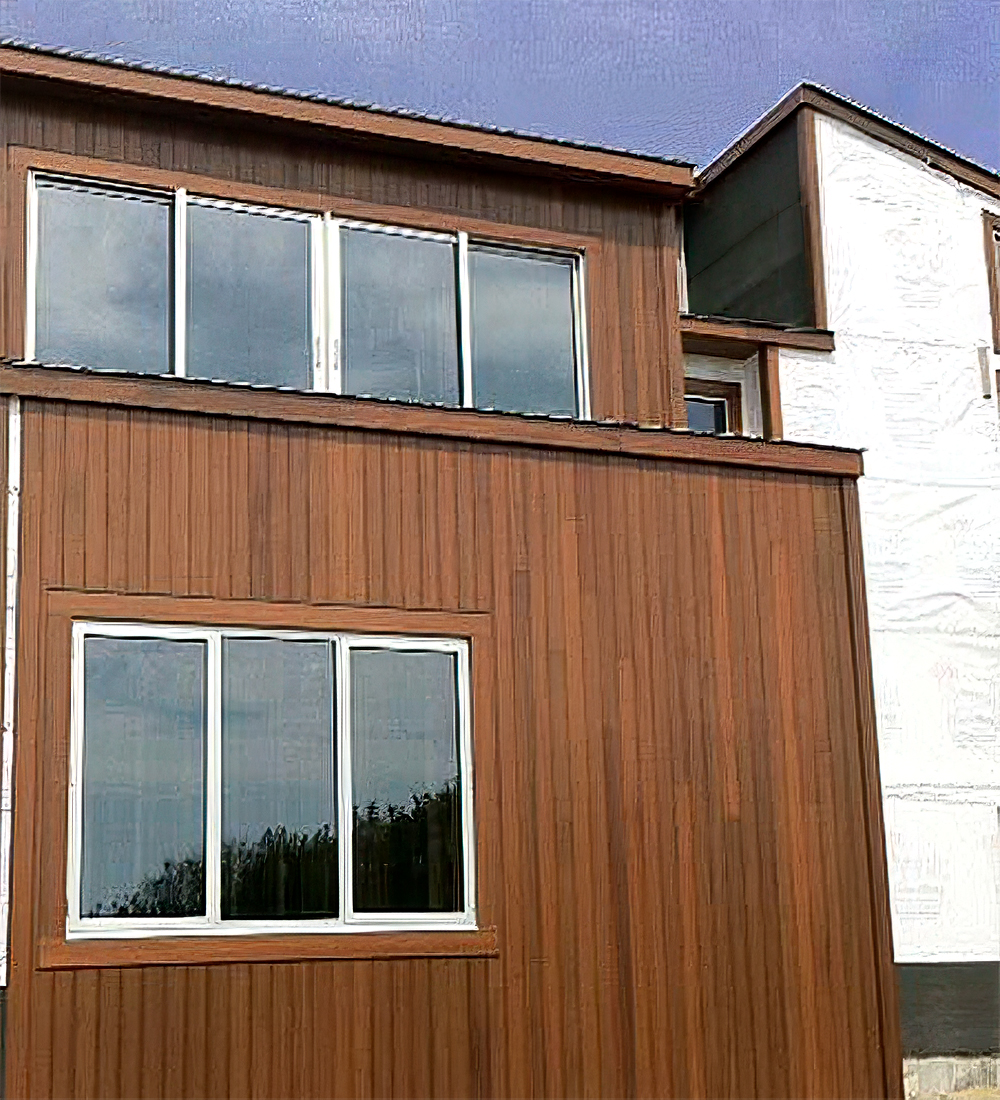
80% of all construction-related claims in the United States are due to water damage. Some Rain screen siding basics could mitigate the vast majority of these claims before they occur. Rain screen wood siding systems minimize water infiltration, while providing an effective, durable and aesthetically pleasing option. Building codes require rain screen installation in various locations. Oregon now requires a minimum 1/8-inch-deep gap between siding and the water resistant barriers for all new homes.
The contemporary wood panel rain screen design is based on technology found in Scandinavian and Japanese structures dating to the 12th century. Many of these buildings remain standing in remarkable condition to the present day.
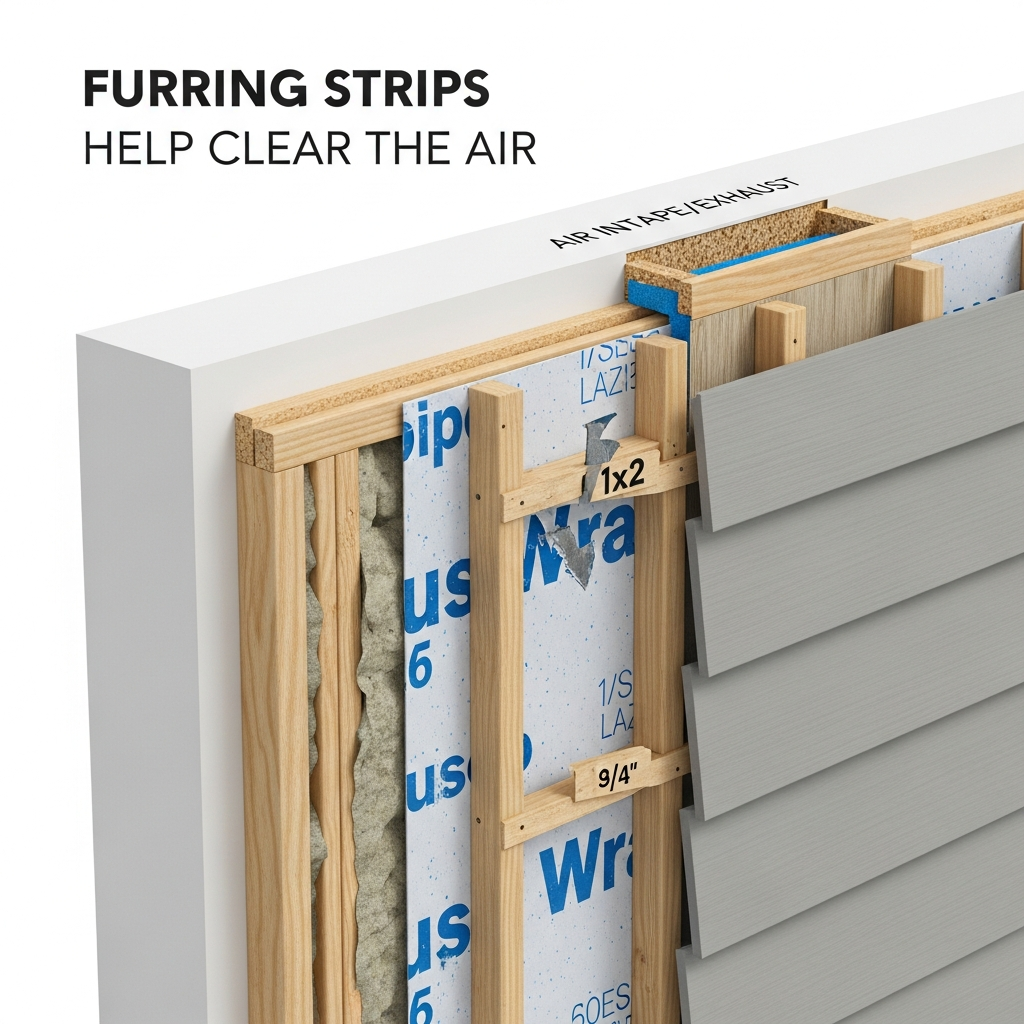
A rain screen system consists of a building envelope (A moisture resistant barrier wraps the exterior wall. Asphalt-impregnated building paper is one common product.) and an outer rain screen. An air space gap, usually about ¾”, separates the rain screen from the moisture-resistant surface of the exterior wall.
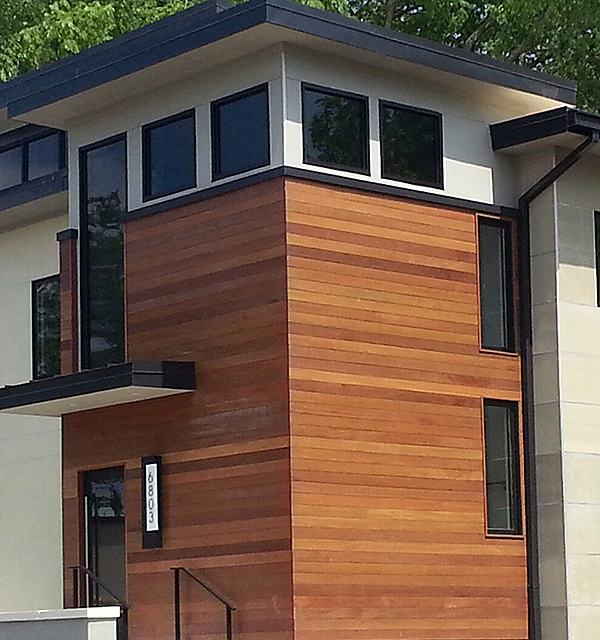
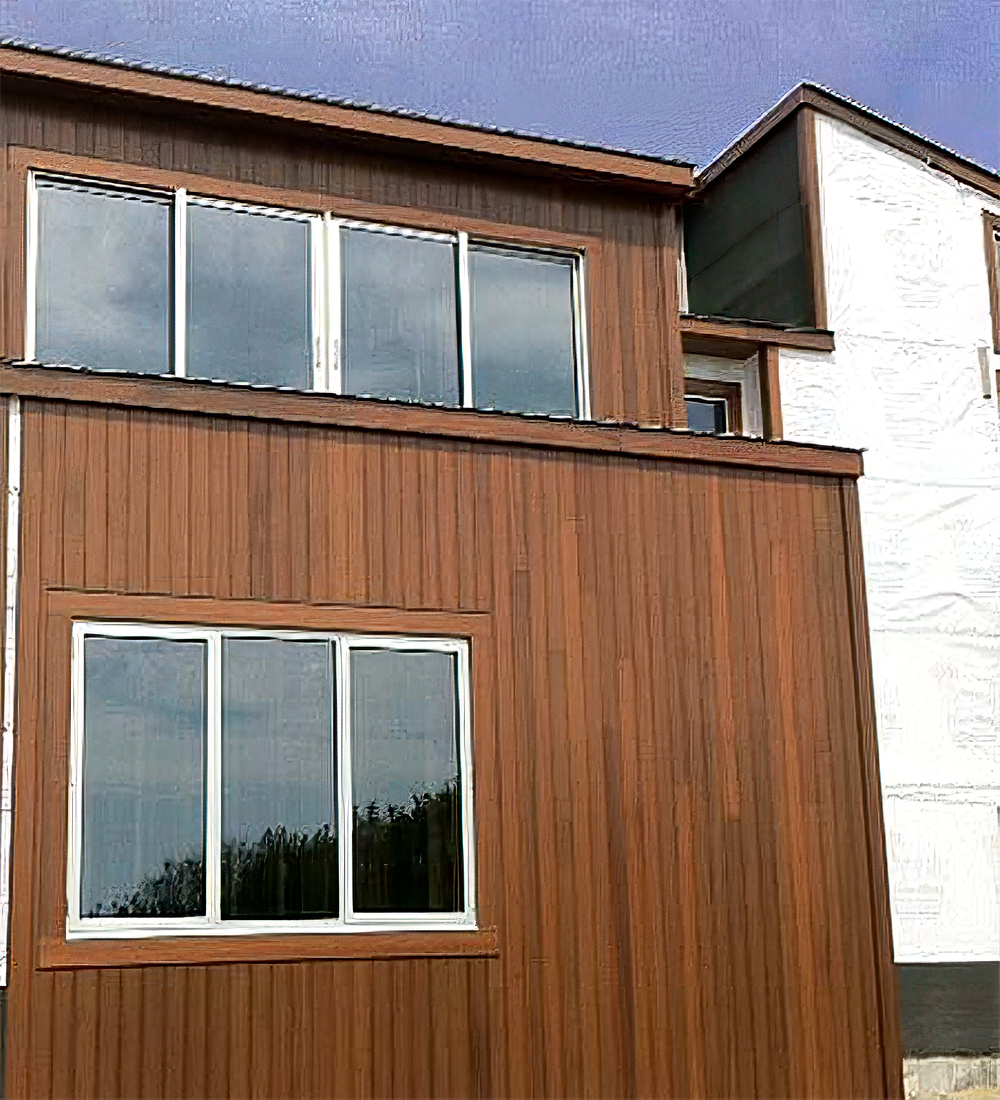
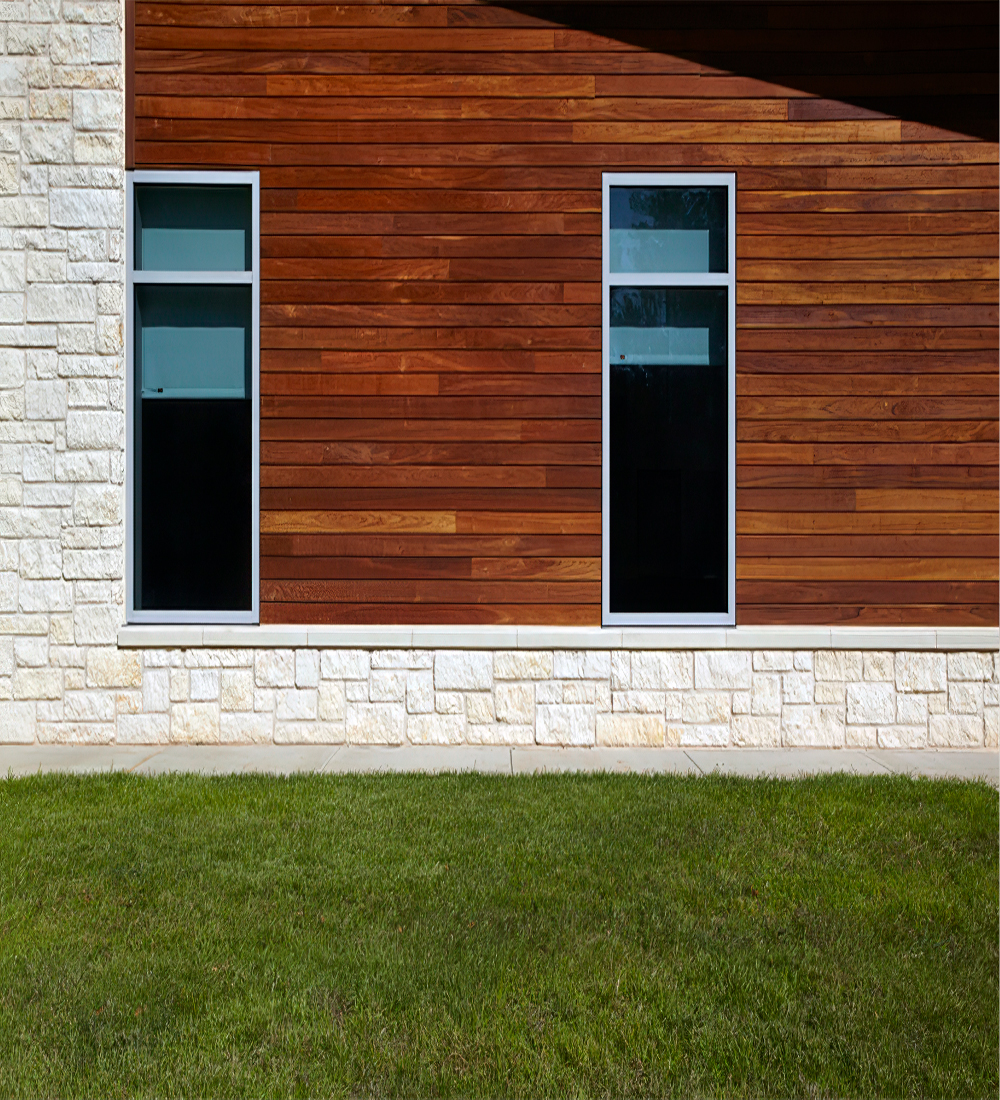
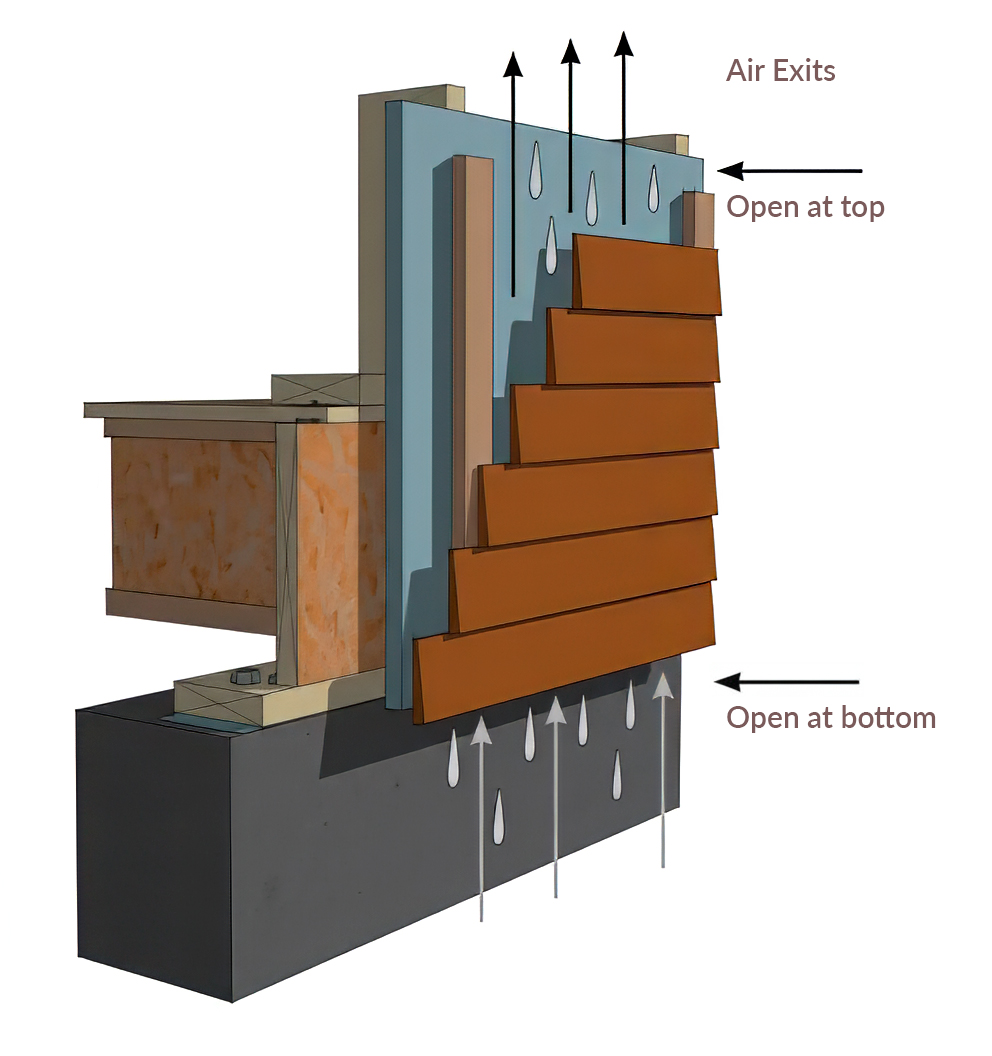
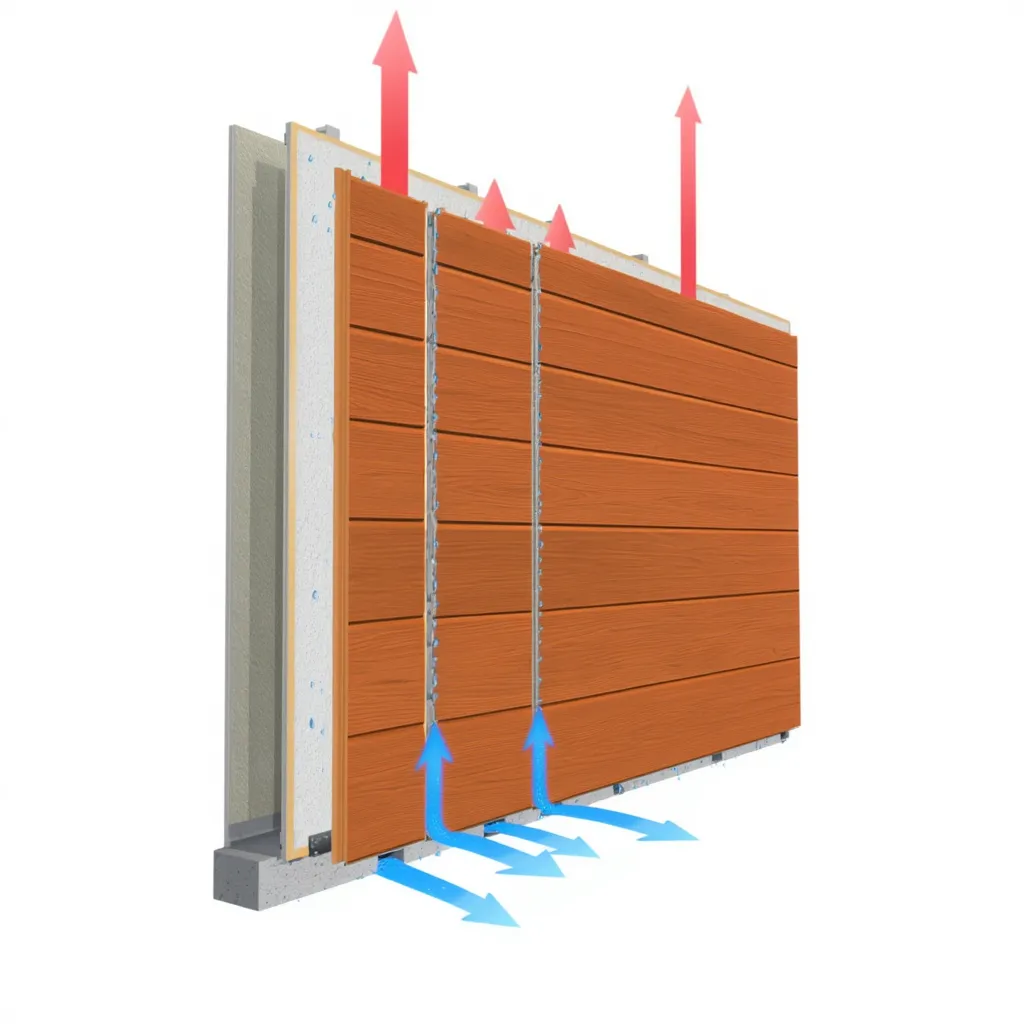
Convectional drying increases by dividing the airspace into vertical compartments (cavities or chimneys). Convection current velocities generate slightly lower air pressure inside the chimneys than outside. This pressure differential increases airflow through the system. Researchers named this the “stacking effect” and have shown it an important mechanism to remove moisture from the system. The airspace lacks chimneys in a non-furring strip system. The wall surface is one continuous airspace and the stacking effect is lost in non-furring systems. The benefits are also lost, and these are considerable.
The rain screen wall dries quickly with these chimneys, while increasing the rate of moisture transfer away from the building envelope. Moisture leaches to the furring strip, which then diffuses through the rain screen. Then vapor evaporates into the cavity. Convection currents remove this moisture when it re-diffuses and evaporates from the furring strips. This mechanism is the diffusion-evaporation-redistribution cycle.

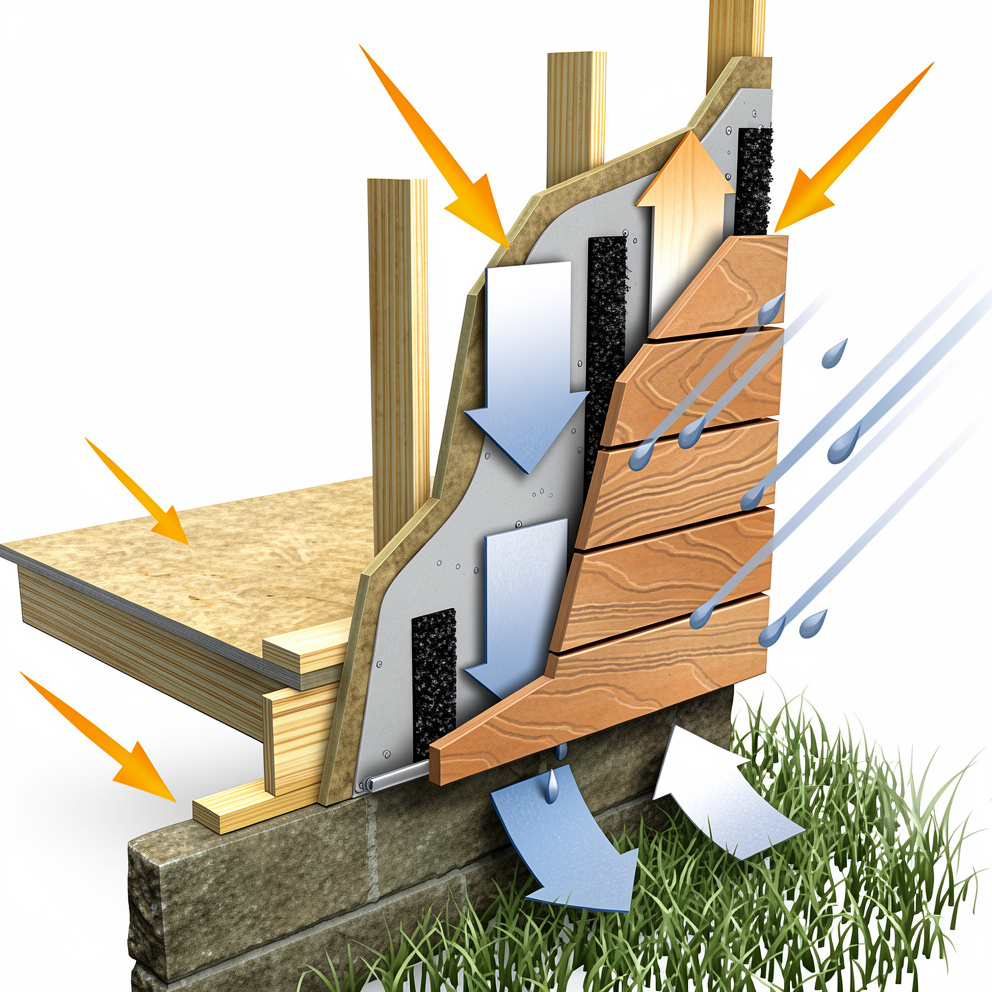
Trans-wall pressure gradients reduce as the result of these chimneys in rain screens. This reduction increases when air space is properly compartmentalized. Chimneys don’t exist in some non-furring strip systems.
These two articles discuss compartmentalization in greater detail:
The thermal conductivity of a substance indicates its ability to conduct heat. The wooden furring strips conduct heat essentially the same as studs and wall cladding. Rain screen fastening clips are composed of metal, usually aluminum and stainless steel. The thermal conductivity of these materials are shown below:
Wood furring strips conduct heat at rates 360 to 2500 times lower than metal rain screen clips. Furring strips decrease thermal bridging to the structure’s interior. Thermal conduction and bridging are lowest with furring strip installation. Furring Strips constitute up to 16% of overall wall area. Therefore, the gain in effect is significant.
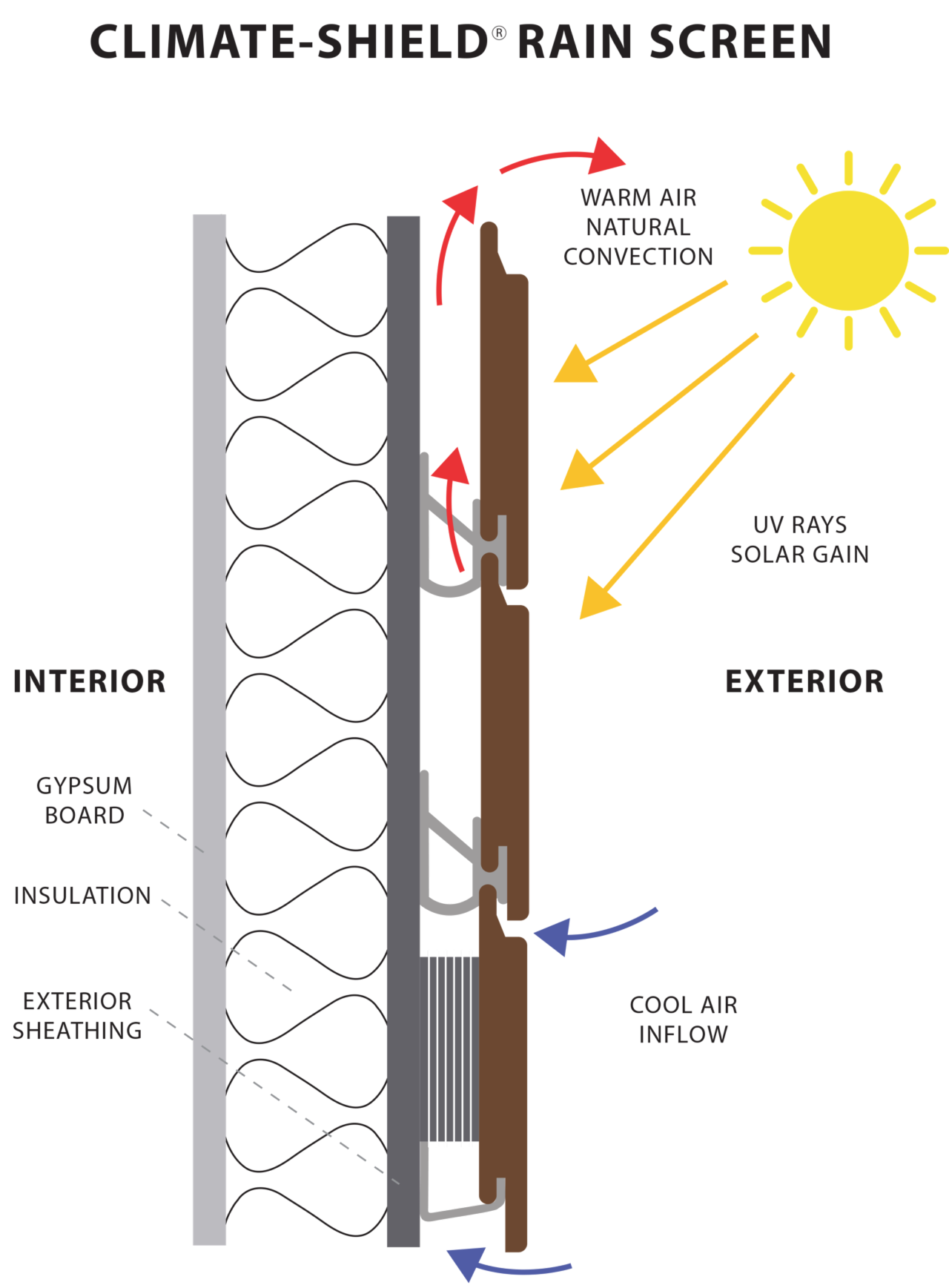
The rain screen wall dries quickly with these chimneys, while increasing the rate of moisture transfer away from the building envelope. Moisture leaches to the furring strip, which then diffuses through the rain screen. Then vapor evaporates into the cavity. Convection currents remove this moisture when it re-diffuses and evaporates from the furring strips. This mechanism is the diffusion-evaporation-redistribution cycle.
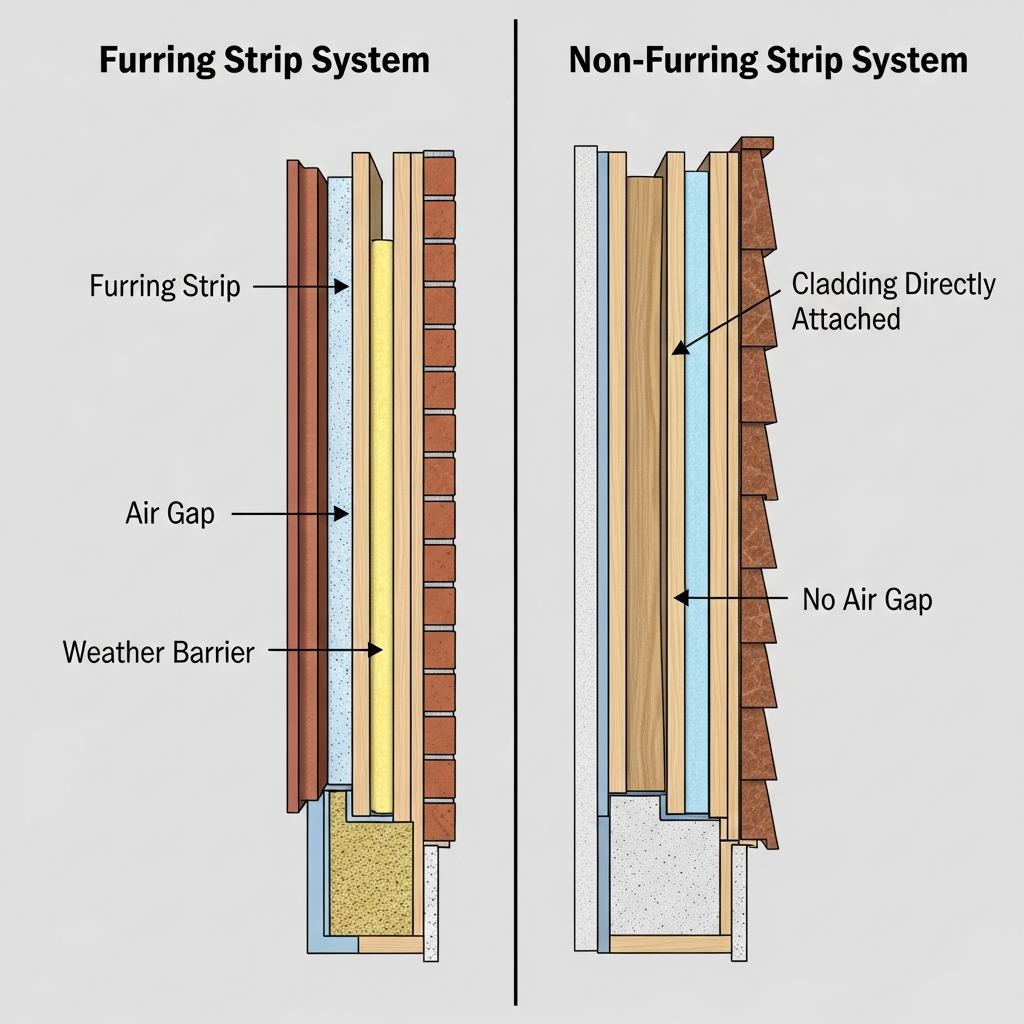
The rain screen wall dries quickly with these chimneys, while increasing the rate of moisture transfer away from the building envelope. Moisture leaches to the furring strip, which then diffuses through the rain screen. Then vapor evaporates into the cavity. Convection currents remove this moisture when it re-diffuses and evaporates from the furring strips. This mechanism is the diffusion-evaporation-redistribution cycle.
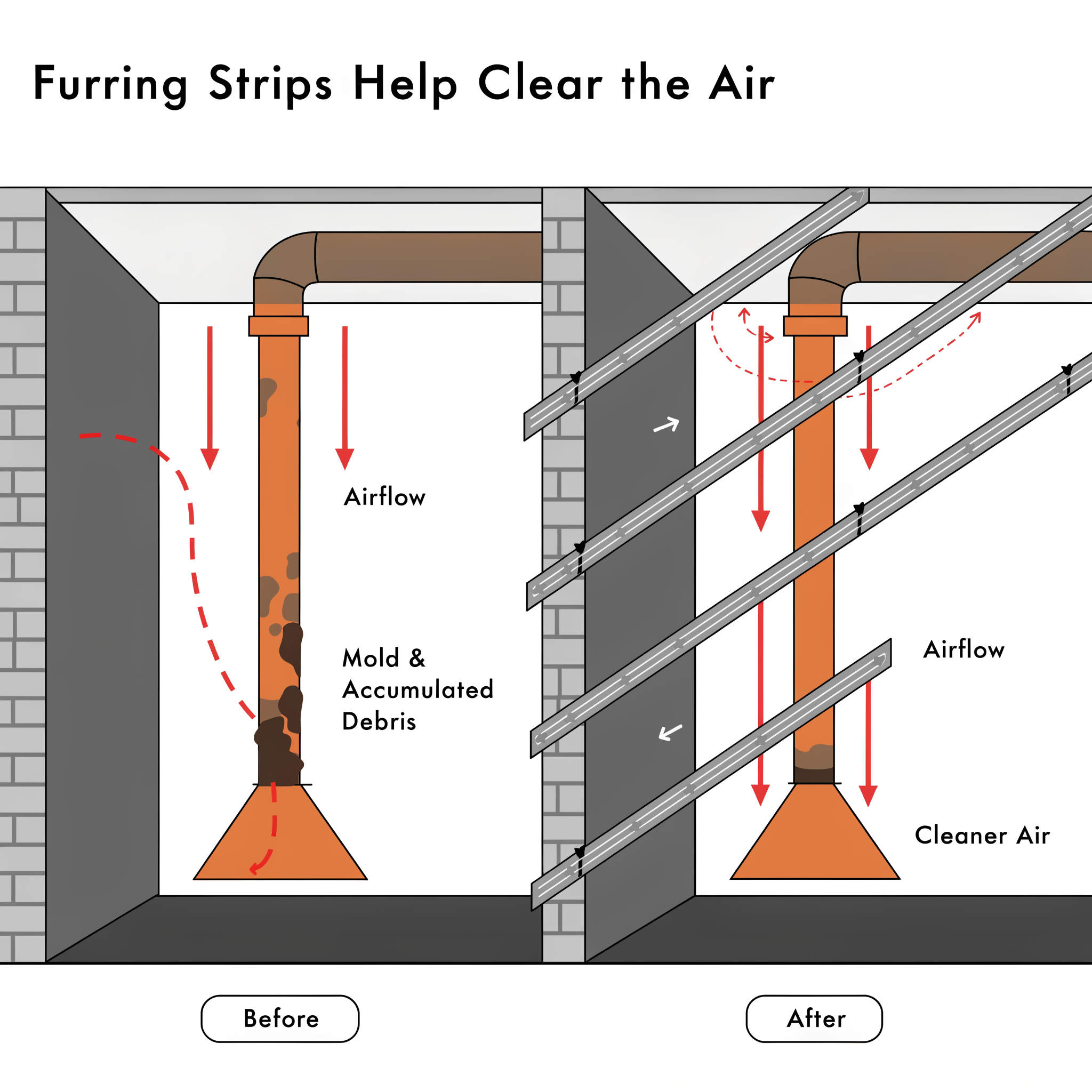
The US Department of Energy published an extensive study of the effects of moisture. They further studied proper methods of dealing with trapped moisture. This 273-page study concludes that mildew and wood rot occur almost exclusively in a CLOSED airspace. This report cites no evidence that furring strips in a wood screen system “trap water” much less be prone to develop mildew or rot.
To the contrary, the report indicates that wood furring strips actually improve the efficiency of moisture removal. The reason is that moisture cycles within the furred airspace cavity, while undivided airspace lacks the same benefit.
3824 Fremont Ave, Kansas City, MO, 64129-1729, United States
+1 816 506 4131
© 2026 Specialty Lumber Solutions. All rights reserved